
Hip Osteoarthritis: Why the Arthritis May Not Be the Real Problem
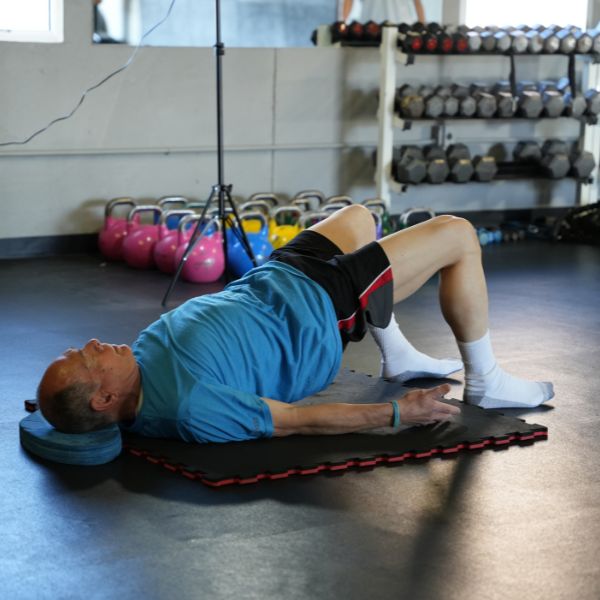
More than an MRI.
Hip osteoarthritis is one of the most common causes of hip pain, especially as we get older. If you’ve recently had an X-ray or MRI, there’s a good chance you’ve heard phrases like “bone-on-bone,” “cartilage loss,” or “wear and tear.” While those findings are real, they often leave people feeling like their future has already been decided.
Fortunately, that’s rarely the entire story.
One of the most surprising things about hip osteoarthritis is that the amount of arthritis seen on an image doesn’t always match the amount of pain a person experiences. I’ve worked with people whose X-rays looked terrible but who continued hiking, golfing, and exercising with very little discomfort. I’ve also seen people with only mild arthritic changes struggle to walk across a parking lot.
If arthritis alone caused pain, those situations wouldn’t exist.
Instead, your imaging tells us what your hip looks like. It doesn’t tell us how your hip functions.
Think of Your Hip Like a Rusty Door Hinge
Imagine an old door hinge with a little rust on it.
If the door is perfectly aligned, the hinge can continue working for years without much trouble. But if the frame begins to sag and every time the door opens extra pressure is placed on one side of that hinge, the rust suddenly becomes much more noticeable. The hinge hasn’t changed nearly as much as the forces acting upon it.
Your hip works much the same way.
Arthritis represents wear inside the joint. But the amount of stress placed on that joint depends on how efficiently your body distributes force every time you stand, walk, squat, climb stairs, or simply get out of a chair.
The Hip Doesn’t Work Alone.
One of the biggest mistakes I see is treating the hip as if it exists in isolation.
Every step you take begins at your foot. Force then travels through your ankle, knee, pelvis, spine, rib cage, and finally into your
. If any link in that chain isn’t moving or stabilizing well, another area has to compensate.
Over thousands of steps every single day, those compensations matter.
Years of studying SomaTraining and SomaTherapy reinforced a concept that has become central to how I evaluate patients: the body functions as one integrated mechanical system. Fascia connects regions that appear unrelated. The pelvis acts as the bridge between the spine and the lower extremities. Even the diaphragm influences posture, stability, and how forces move through the body.
When those systems lose efficiency, the hip often becomes the structure that absorbs the consequences.
That doesn’t necessarily mean poor movement caused your arthritis. Osteoarthritis develops from many factors, including age, previous injuries, genetics, and normal wear over time. However, once arthritis is present, improving how your body manages force can often reduce irritation and improve function.
Most traditional treatment focuses directly on the painful joint.
Medications attempt to reduce inflammation. Injections attempt to calm irritated tissue. Physical therapy often focuses on strengthening the muscles around the hip. These approaches can absolutely be helpful, and many people benefit from them.
The problem is that they don’t always answer the most important question:
Why is this hip being overloaded in the first place?
If the movement patterns that continually compress the joint remain unchanged, symptoms often return because the underlying mechanics haven’t improved.
How We Treat Hip Osteoarthritis
At Colorado Hip Pain, our first objective isn’t simply to decrease pain. It’s to understand why your hip is experiencing excessive stress.
That begins with a comprehensive movement evaluation. Instead of looking only at the hip, we examine how your feet, knees, pelvis, spine, posture, breathing, and overall movement patterns interact. Often, the painful area is only one piece of a much larger picture.
Treatment may include hands-on manual therapy to restore joint and soft tissue mobility, myofascial stretching to improve the quality of movement throughout fascial chains, osteo-articular pumping techniques to encourage healthier joint mechanics and fluid movement, and segmental strengthening to improve muscular coordination rather than simply increasing strength.
ELDOA exercises frequently become part of the program as well. These highly specific postural exercises help improve spinal alignment, reduce unnecessary compression, and encourage better force distribution throughout the body. Rather than chasing symptoms, the goal is to create an environment where the hip no longer has to absorb more stress than it was designed to handle.
Exercise Is Medicine—When It’s the Right Exercise
Research consistently supports exercise as one of the most effective conservative treatments for hip osteoarthritis.
The key is understanding that not all exercise is created equal.
Simply doing more repetitions or pushing through pain isn’t always the answer. The best exercise program is one that improves movement quality first. As your body begins moving more efficiently, muscles coordinate better, joints share load more effectively, and everyday activities often become less painful.
This is why two people with identical X-rays may respond very differently to the same exercise program. Their movement systems are different.
Is Hip Replacement Your Only Option?
Not necessarily.
Hip replacement surgery has transformed countless lives and remains an excellent option for many people with advanced osteoarthritis. But surgery isn’t the only path.
Many individuals can significantly improve their pain, mobility, and quality of life through conservative treatment. Even for those who eventually require a hip replacement, improving mobility, strength, posture, and movement quality beforehand often leads to a smoother recovery afterward.
The goal isn’t to avoid surgery at all costs. The goal is to make sure you’ve addressed the factors that can be improved before deciding the joint itself is the only problem.
The Bottom Line
An MRI or X-ray tells us what your hip looks like.
It doesn’t tell us how your body moves.
At Colorado Hip Pain, we believe successful treatment begins by looking beyond the joint itself. By improving the way your entire body distributes force—from your feet to your pelvis, spine, fascia, and breathing mechanics—we can often reduce unnecessary stress on an arthritic hip and help you move with greater confidence.
If you’ve been told to simply “live with your arthritis,” remember that your diagnosis is only part of the story.
Your movement tells the rest.
If you’d like to learn more about our whole-body approach to hip pain, visit Pierce Family Wellness or schedule an evaluation with Colorado Hip Pain.
